
Recover and Rebuild: Essential Rehabilitation Exercises for Sports Injuries
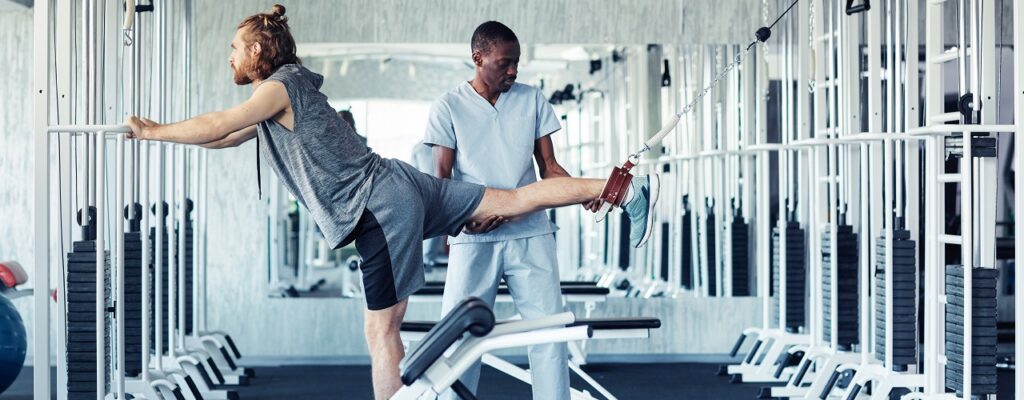
Have you ever missed an essential game, forfeited a cherished morning jog, or skipped a training session because of a sports injury? The twinge in your ankle when you pivot or the pull in your hamstring when you sprint? If you nod your head in recognition, thinking, “That’s me,” or “That’s precisely what I’m experiencing!” you’re in the right place. Our cutting-edge program of rehabilitation exercises for sports injuries to get you back to your peak performance with physical therapy at Advance Orthopedic and Sports Therapy.
In the world of sports, lower extremity injuries are nearly as common as cheers from fans. Whether you’re a dedicated marathon runner or an occasional weekend basketball player, you know that pushing your body comes with its fair share of risks. The real challenge begins when a dreaded injury happens. How can you swiftly and effectively bounce back?
We’ll tailor your program to your needs and make sure any setback doesn’t sideline you for long!
Don’t let injuries define your sports journey; rebuild, recover, and reclaim your passion. Call our clinic today for more information or explore our resources to see if you think you’re dealing with such conditions or would benefit from our specialized treatments.
Common Lower Extremity Injuries and Potential Causes
A sprained ankle is a classic amongst athletes, especially in sports like basketball. Picture this: You’re going for a layup, and your ankle twists awkwardly on landing. The following swelling and pain aren’t just discomforting but limit daily activities, making even simple tasks like walking challenging. This scenario emphasizes the importance of rehabilitation exercises for sports injuries, ensuring athletes regain optimal movement.
The inability to control movement through the variety of activities typical in sports is a significant reason for the higher rate of ligament injuries in the knees, ankles and feet. For instance, athletes less effective in stiffening their knees with the contraction of the knee musculature are more susceptible to injuries in the joint (cartilage and ligaments). This inability to achieve a maximum contraction significantly decreases their ability to control the forward movement of the thigh bone over the shin bone, resulting in injury.
Athletes may demonstrate awkward or inappropriate body movements and muscle contractions before the injury. In addition, there are indications that the sequence of muscle contraction may be limited or impaired. Athletes might take significantly longer to generate maximum contraction, or their muscle recruitment order is markedly different. A common example in the knee is the recruitment of the quadriceps contracting instead of the hamstrings for initial knee stabilization/control.
The typical mechanism of injury is a quick but awkward stop, such as landing from a jump or a sharp cut to change direction. Deceleration type of movement or anticipation of lateral movements can also result in injury to the joints in the lower body. Without the ability to coordinate their muscle contraction to control movement during these activities, athletes are more likely to get injured. Hence, it’s crucial to integrate rehabilitation exercises for sports injuries into their recovery plans.
A weak core is another possible contributing factor to injuries in the lower extremities. If the leg muscles are strong, but the core muscles (i.e., abdominals, hip/pelvis, and back muscles) are weak, it sets the stage for injury. Strengthening these core muscles, alongside targeted rehabilitation exercises for sports injuries, can significantly prevent future injuries to your lower extremities.
Common Lower Extremity Sports Injuries:
- Sprained Ankle: This occurs when the ligaments that support the ankle stretch or tear. Awkward landings, sudden twists, or direct impacts commonly cause it.
- ACL (Anterior Cruciate Ligament) Tear: A tear in one of the knee ligaments that connects the shinbone to the thigh bone. It’s common in sports involving sudden stops and direction changes, like soccer and basketball.
- Meniscus Tear: Tear in the shock-absorbing cartilage of the knee. It can result from both trauma and wear and tear.
- Hamstring Strain: The overstretching or tearing of one or more of the hamstring muscles at the back of the thigh.
- Groin Pull: Strain of the muscles of the inner thigh. It’s common in sports that involve side-to-side movement.
Regardless of the limitations and restrictions athletes may have, our team of physical therapists can help. We will assess their ability to control movement, test the factors contributing to injury, and provide drills and exercises to maximize their ability and minimize the risk of injury!
What to expect at the physical therapy session, and How can physical therapy help reduce the risk of injury?
Our physical therapists help athletes in a variety of ways. We will start with a biomechanical assessment and a movement screen to identify all the factors that may put them at risk for a lower-body injury. Once identified, appropriate rehabilitation exercises for sports injuries will be recommended to address these specific vulnerabilities.
A physical therapist with sports rehabilitation experience will conduct a thorough evaluation. This will consist of a thorough history to understand more about the training schedule for each sport they participate in and the athlete’s overall health status.
After your examination, your therapist will create a targeted, individualized plan of care for you to continue on your own. This plan will often include rehabilitation exercises for sports injuries, focusing on both in-season training and preventative measures to maximize your recovery and prevent future injuries!
At Advance Orthopedic and Sports Therapy, we leverage cutting-edge research and evidence-based practices to design our sports-specific rehabilitation techniques. Recognizing the importance of neuromuscular control and understanding the intricate interplay of muscle function in athletes is at the core of our approach.
Here are some of the most advanced sports-specific rehabilitation methods we incorporate:
- Neuromuscular Stabilization: This method emphasizes the principles of developmental kinesiology to retrain the body to move correctly. Dynamic Neuromuscular Stabilization (DNS) has been recognized for its potential to improve neuromuscular coordination, enhance athletic performance, and reduce the risk of injury.
- Proprioceptive Neuromuscular Facilitation (PNF): PNF techniques involve rhythmic stretching and muscle contractions. PNF has been shown to increase the range of motion and improve muscle elasticity, making it valuable in rehabilitating sports injuries.
- Advanced Core Stability Programs: Focuses on training the deep core muscles to improve stability and transfer of force through the kinetic chain. A strong core is pivotal for optimal athletic performance and injury prevention. Research has shown a correlation between core strength and reduced injury rates in the lower extremities.
- Blood Flow Restriction (BFR) Training: BFR involves wearing cuffs on the limbs to safely restrict blood flow while exercising, allowing athletes to gain strength using much lighter weights. Studies have demonstrated accelerated muscle hypertrophy and strength gains, which can be beneficial in early post-injury phases when loading the injured area may not be possible.
- Sport-Specific Simulation and Drills: Emphasizes recreating the specific demands of an athlete’s sport within a controlled setting. Sport-specific training ensures that rehabilitation, including rehabilitation exercises for sports injuries, is tailored to the athlete’s unique needs, preparing them for a safe return to sport.
By incorporating these advanced rehabilitation techniques into our treatment plans, Advance Orthopedic and Sports Therapy ensures that athletes are recovering from their injuries and gaining the necessary skills and strength to prevent future injuries. Our mission is to bridge the gap between injury and peak performance, allowing athletes to return to their sports confidently.
Request an appointment at Advance Orthopedic and Sports Therapy today!
It’s essential for athletes and individuals to recognize the signs and symptoms of lower extremity sports injuries early on and seek appropriate interventions. Early detection and treatment at Advance Orthopedic and Sports Therapy will often lead to better outcomes and shorter recovery times.
Request an appointment today, and let us help make sure your young athlete is prepared to play!